Thursday, February 27, 2014


The Everglades
The Everglades are subtropical wetlands in the Southern portion of the U.S. State of Florida. The everglades encompass 2.5 million acres of cypress swamps, mangroves, sawgrass and pine savannahs. It is the only place in the world where crocodiles and alligators share territory.


Mangroves
Mangroves are various types of trees up to medium height and shrubs that grow in saline coastal sediment habitats in the tropics and subtropics.


Monday, January 20, 2014

Why Certain Countries Have A High Percentage of Out-of-School Children

While I checked out Google Charts and websites,

I found out 5 reasons to this problem.

1. The students themselves 
They make wrong decisions. They get involved with gangs, drugs/alcohol, get pregnant and commit crimes. Many have a poor school attitude and are frequently bored by school. They are disconnected to their families, school and life. They do not see the reasons they need to go to school. They are not involved in school activities and lack self-esteem. Some have been promoted lacking skills needed for promotion. Some have undergone major illnesses and have missed too many days of school and have been informed that they will be held back. Because of many of the conditions listed above, they have been suspended and have fallen behind in their work and see little purpose of returning to school. 

2. The family they come from
There is often a clash between the family values and those of the school. Frequently, their parents have dropped out of school themselves. The students come from families from low socio-economic backgrounds, where there are many other children. Older children often have to go to work in order to supply the family with much-needed funds for basic family needs or need to stay home to take care of younger siblings so that their parents can work. Many children come from non-English speaking homes with high mobility. Single parent homes have become the norm in the United States. Many children are products of divorce, separation or, sometimes, family violence. hey are not being raised by parents, but rather by aunts, uncles and grandparents. Families are not meeting some children's basic needs of food, clothing and shelter.

3. The community they come from
Many children live on the wrong side of the tracks in places where education is not valued, where drugs, gangs and violence abound. And where schools are low-performing, they often lack community and health support.

4. The schools they attend
The schools are toxic to student learning, students, parents and staff. Students are suspended for minor infractions (such as "talking back to the teacher"), or placed in "remedial classes." The schools have a culture of low expectations. They lack adequate guidance counseling. The curriculum is not relevant to the needs of the students being taught. Passive instructional strategies are being used without regard to individual student learning styles.Teachers are not trained in the latest teaching/learning/technology techniques. Funding is based on property values so that low-income neighborhoods receive less funding than wealthy neighborhoods. Because some states pass budgets in a less than timely matter, teachers are not hired in time producing over-sized classrooms. 

5. The teachers they have 
The least-experienced, least classroom-trained teachers are often assigned to the most difficult schools. They enter the field with the expectation that they have been adequately prepared by the schools of education with the skills they need and they haven't received. They are leaving the field faster than colleges can prepare them. The teacher "dropout rate" is higher than the student dropout rate. Forty-six percent of teachers leave the field within five years. When asked why they leave, a majority state that they haven't been properly prepared, have had increased demands placed on them because of high stakes testing and are not getting adequate support from their supervisors in dealing with classroom discipline.


Sustainable Fishing

Subject: Group J
Message: Examine the sustainability of ocean fishing. [10 marks]

               
Sustainability of ocean fishing has many obstacles but there are clear solutions to every issue there is.

There’s also a political issue about sustainable fishery in some countries. Fishery take big portion of economy in some country that sustainable fishery gives big damage to the country’s economy. People, especially fisher men, stand against government if it launches sustainable fishery policy. This leads serious political issues such as government will lose support from people and possible riots can be happen. Due to this reason, politicians refuse the scientist’s sustainable fishery solution which is to limit the fishery up to 15 thousands of tons. Instead, politicians rather want to limit up to 30 thousands of tons. But politician doesn’t execute their promises well that about 60 thousands of tons are caught in the actual situation. This is because politicians don’t have solution to those unemployed people due to the sustainable fishery and riots and anti-government policy made by these people will great damage to the government. The solution for political issue is simple. Since citizen has more power than politicians, citizen should observe the fishery and make sure that the sustainable fishery policy is working without problem. Also, people can participate in campaigns that sustainable fishery is mandatory. This gives a sign to the politicians that executing sustainable fishery policy will also gain support from citizen instead of hated by fisher men. Politicians also have to look for solution to those unemployed fisher men such as giving them temporary jobs.

               It is known that it is absolutely difficult to force people especially fishermen to help recover fish stocks even though they will need to do it at some point. By halting one fisherman’s piscary, you are telling them indirectly to take a break from their jobs, suffering from financial distress in order to regain the great abundance and production of fish that we had about 200 years ago. Sacrificing people’s jobs in order to recover from overfishing will have a severe impact on the fishing industries and on people’s lives through losing their jobs even if it is for the greater good. Furthermore, great extents of effort and money to make sure these fishermen will unquestionably follow the rules entrusted to them or prevent them from breaking the rules. Money will be spent on marine squads focused on protecting areas and prohibit fishing. On the other hand, by requiring more marine protection, it allows us to produce and generate a tremendous amount of jobs for other people, increasing a country’s IPP, income per person. Also, when fish stocks finally revert back to its old state, fishing industries will be able to recover from the decline of income and money, eventually having an increase once again in its economical status.

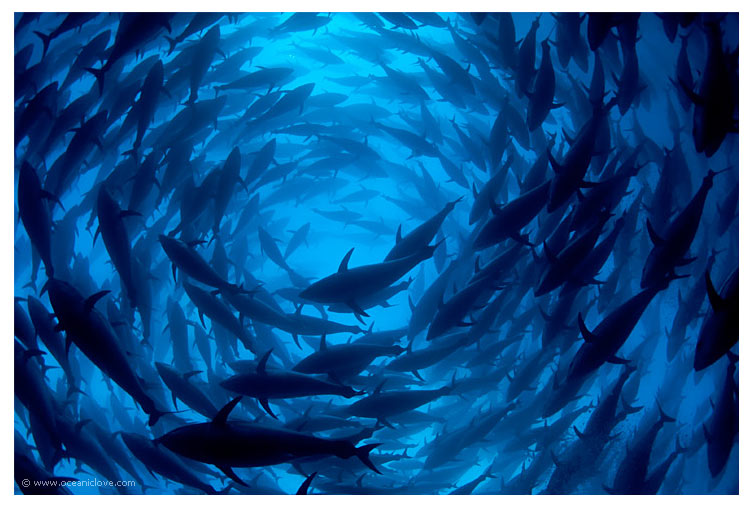
              Ocean fishing has many environmental drawbacks, which makes  the resources in the ocean unsustainable. The total world catch keeps going up, while the number of fish in the ocean is decreasing. Because the fishermen do not follow the rules and laws the government has implemented, the ecosystem under the ocean is being damaged. As the number of shark and fish went down, the number of rays, shrimps, jellyfish has increased. Not only that, but our seas are now filled with worm, algae, and fungi. Because of the decline in the amount of fish under the ocean, the food chain has collapsed. There are also increasing species of fish that are going extinct, such as cod and blue fin tunas. Over 10 years, the catch of blue fin tuna has declined to 80% because there are simply none left in the ocean. There are just too many boats while there are too few fish. However, there is also a possibility that in the future, ocean fishing will be sustainable. If the marine protected areas, which only cover 1%of the world ocean increase to about 20 ~ 30% it would be possible to sustain ocean fishing. And also, if the consumers buy MSC fish stocks, which comes form a sustainable source, and as consumers are interested to know where the fish they eat is form, how it is caught and if it is endangered or not, it is not entirely impossible to support the fauna that lives under the water. 

Monday, November 25, 2013

Gavin, Nguyen and Teemo

While I visited the 2nd Graders,

I, Teemo, paired up with Nguyen and met a very nice fellow named Gavin. Nguyen and I had a blast teaching Gavin how to create his tour, but the only problem but not so big is that he typed slow. So Nguyen and I offered to help him by asking him if he would like assistance in typing, and so he replied "Yes please", so we continued to type one sentence each. While we took a brief look at his wanted tour, it showed that he wanted to tour the places in America such as San Francisco, New York, and Chicago. For some reason, Gavin always found happiness in choosing the icon for the placemark and spinning the globe around and around and around. He spinned the globe right round, right round, like a record baby, right round, round round. I hummed this melody as he kept spinning the globe and he was probably annoyed by it but nevertheless we all had fun. As we left, we gave him a Hi-5 to symbolize our friendship and kept yelling out "Bye" to Gavin. An add-on, I think he had  the best handwriting ever, a God-given gift. 


Captain Teemo is always on duty!

Thursday, November 21, 2013

New Island in Japan

While I scouted out Japan,

I found out that a new island was formed by a volcano.

How do volcanoes form islands?
There it is! Teemo spots it! Japan, this is mine right?

Islands can be formed by volcanoes by the constant flowing and hardening of lava. When lava flows in the ocean it is cooled really fast and can accumulate faster than on land.

But enough of that!

Japan got just a little bit bigger this week, as a volcano created a brand new island about 600 miles (970 kilometers) south of Tokyo. The island is about 660 feet (200 meters) in diameter, according to the Japanese coast guard. It sits off the coast of Nishinoshima, itself a small, uninhabited island in a group of about 30 islands known as the Bonin Islands, or the Ogasawara chain.


Hey Yoshihide Suga,
can I have the island?
Japanese government spokesperson Yoshihide Suga was asked by the media "What name would be given to the island?" while he replied that officials will first wait to see how long it sticks around, since new islands have a tendency to disappear back below the waves in a short time. "If it becomes a full-fledged island, we would be happy to have more territory," Suga told the press.

There is a video released on the web recorded by a Japanese coast guard. You can go check the link below! It is shown in the video that ash and rocks are exploding from a crater that erupted from the sea.

http://www.youtube.com/watch?v=YZY6kH_RXSU


But Hiroshi Ito who is a coast card volcanologist is unsure if the island will be reclaimed by the sea or whether it would stay permanently. 


Captain Teemo is always on duty!

Sunday, November 17, 2013

Teemo Scouts Out China

While I scouted out China,

I found out that they were easing off from their one-child policy. By doing so, they have increased baby-related industries and companies economic income because of more babies needing these specific types of things such as cradles and diapers but in doing so, it also increased the amount of resources being used to make these. 

They also probably wanted to let people have more than one child due to the fact many old people were alone and had no one to support them through their life, and probably felt pity that they would die by themselves. So by doing so, they also avoided one couple's depression of having only one child and jealousy of a foreigner's family and their happiness. 

Sex-ratio-wise, sooner or later, they will be able to balance the amount of males vs the females because of the known problem of males absolutely dominating females in number. Now those single males can finally start finding somebody to love. So sweet. So I, Teemo, think this is the most reasonable choice to do.


Captain Teemo, is always on duty!